Inverted HammerCandlestick Pattern
A powerful bullish reversal signal appearing after downtrends, characterized by a small body with a long upper wick that signals potential trend change.
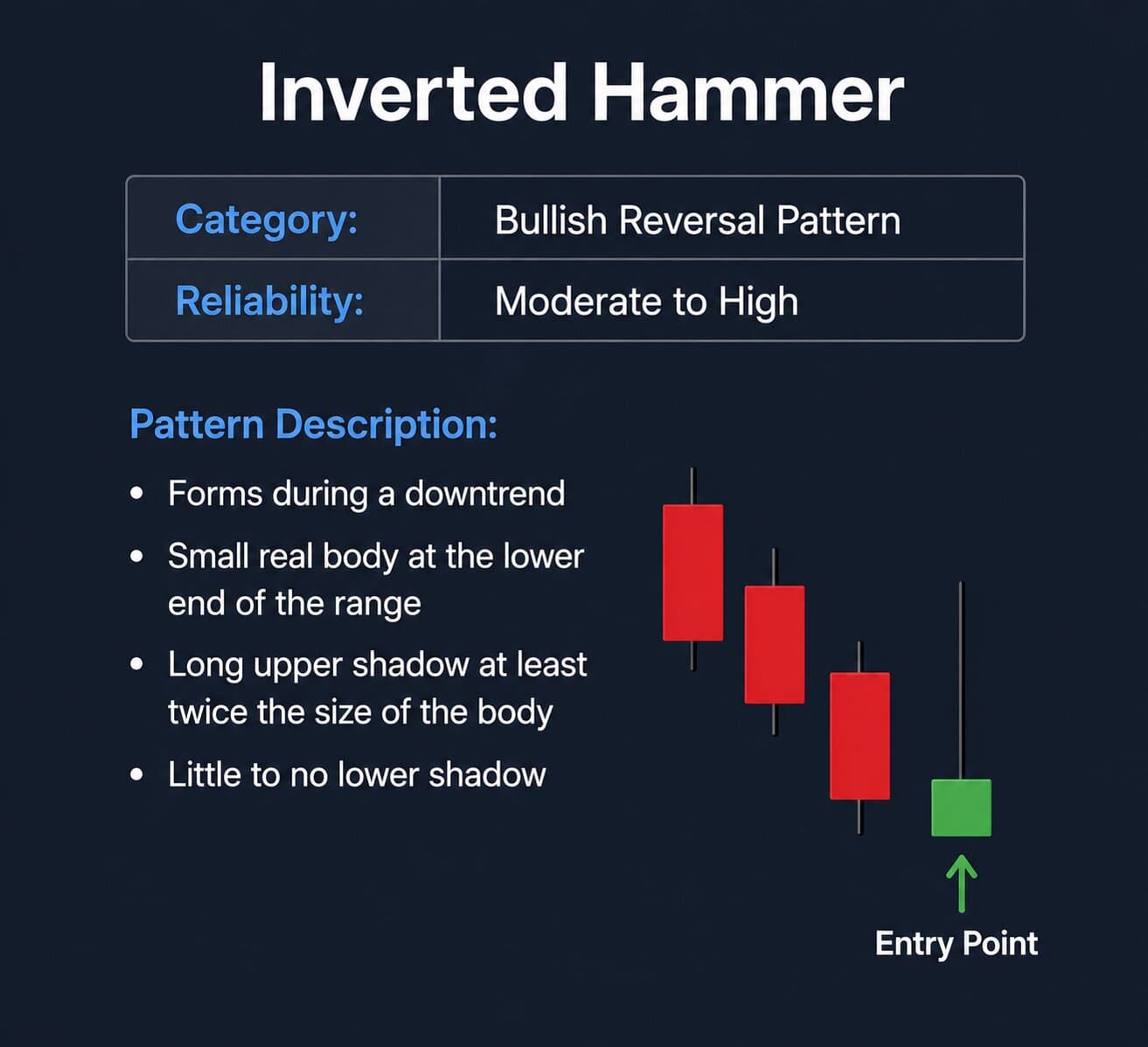
Key Characteristics
Understanding these essential features will help you identify the Inverted Hammer pattern with confidence.
Small Body
The body is relatively small and can be either bullish (green) or bearish (red), located at the lower end of the trading range.
Long Upper Wick
The upper wick should be at least twice the length of the body, illustrating strong buying pressure during the session.
Downtrend Location
The pattern appears after a clear downtrend, signaling that sellers are losing control and buyers are stepping in.
What is the Inverted Hammer?
The Inverted Hammer candlestick pattern is a bullish reversal pattern that forms at the bottom of a downtrend. It suggests that selling pressure may be weakening and buyers are trying to move the price upward.
This pattern has a small candle body near the lower part of the candle with a long upper shadow. The long upper wick shows that buyers pushed the price much higher before the candle closed. Although sellers may still be active, the pattern gives an early signal that market sentiment could change from bearish to bullish.
Key Insight
This behavior suggests a shift in market sentiment from bearish to bullish, as buyers demonstrate willingness to push prices higher even in a downtrend environment.
How to Identify the Pattern
Structure of the Inverted Hammer
Downtrend Preceding the Pattern
The market should already be moving lower before the pattern appears.
Formation of the Candlestick
The price opens lower, trades down, but then rallies significantly to form a long upper wick, closing near the open.
Volume Consideration
Higher volume during formation increases the pattern's significance and reliability.
Types of Inverted Hammers
Regular Inverted Hammer
Appears in a downtrend and signals a potential bullish reversal. The pattern you're learning about.
Shooting Star
Similar in appearance but occurs after an uptrend, indicating a potential bearish reversal.
Trading Strategy
Entry Strategy
Wait for Confirmation: Traders usually wait for the next candle to close above the high of the Inverted Hammer before entering a buy trade. This helps confirm bullish momentum.
Setting Stop Loss
Stop Loss Placement: A stop loss is commonly placed below the low of the Inverted Hammer candle to manage trading risk.
Determining Target Price
Target Calculation: Traders can measure the total size of the candle and project the same distance upward from the breakout level to estimate a target price.
Example Calculation
If the Inverted Hammer has:
- High:
$60 - Low:
$50 - Close:
$55
Distance = $60 - $50 = $10
Target = $60 (breakout) + $10 = $70
Risk Management
Risk-Reward Ratio
Risk management is very important while trading candlestick patterns. Many traders prefer using a minimum risk-reward ratio of 1:2. This means the possible reward should be at least double the amount being risked on the trade.
Position Sizing
Traders should always choose a position size based on their account balance and risk tolerance. Proper position sizing helps protect trading capital and reduces the impact of losing trades.
Tips for Successful Trading
Use Additional Indicators
Incorporate RSI or MACD to confirm bullish momentum and enhance your trading decisions.
Assess Market Context
The Inverted Hammer is more effective in bullish market environments. Consider broader trends.
Be Patient
Wait for confirmation of the bullish reversal before entering. Avoid rushing into trades.
Conclusion
The Inverted Hammer candlestick pattern is a valuable tool for traders looking to identify potential bullish reversals after a downtrend. By following a systematic approach to identifying the pattern, managing risk effectively, and confirming with volume and other indicators, you can enhance your trading strategy and increase your chances of success.
Happy trading!
Frequently Asked Questions
Why does the inverted hammer signal a bullish reversal when the wick is on top?
The long upper wick shows buyers tried to push price higher during the candle, but sellers pushed it back down by the close. After a downtrend, that rejection of lower prices often means selling pressure is fading. The small body near the low suggests buyers are stepping in—hence the bullish reversal potential.
Should I wait for the next candle after an inverted hammer?
Yes. Waiting for the next candle to close above the inverted hammer’s body (or high) confirms that buyers are in control. Entering on the inverted hammer candle alone is riskier because price can still fall. Confirmation improves your win rate and helps avoid false signals.
Can the inverted hammer appear in an uptrend?
It can appear anywhere, but its meaning changes with context. After a downtrend it’s a bullish reversal signal. After an uptrend, a candle with a long upper wick and small body is often called a shooting star and can signal a bearish reversal. Always look at the trend before the candle.
How is the inverted hammer different from a shooting star?
They look identical—small body at the bottom, long upper wick. The difference is context: inverted hammer forms after a downtrend (bullish signal); shooting star forms after an uptrend (bearish signal). The same shape, opposite trend, opposite interpretation.
Where do I put my stop loss when trading an inverted hammer?
Place your stop loss just below the low of the inverted hammer (the bottom of the body or wick). If price breaks below that level, the reversal setup is invalidated. Some traders use a stop below the recent swing low for extra room.