Dark Cloud Cover Pattern
Like storm clouds rolling in over a sunny day, this pattern warns that the bullish weather is about to turn.
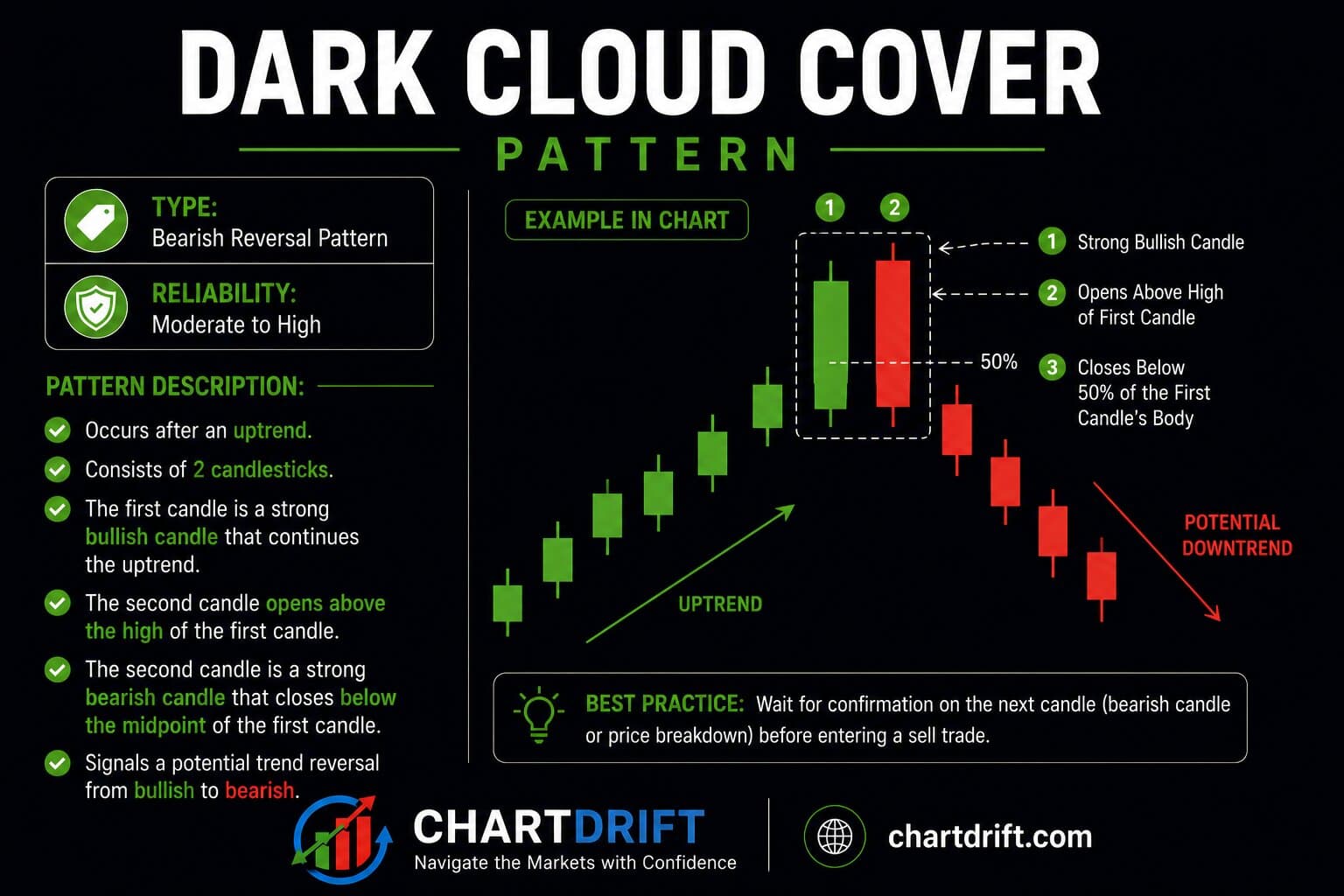
What is the Dark Cloud Cover Pattern?
The Dark Cloud Cover is a two-candle bearish reversal pattern that appears at the top of uptrends. It gets its name from the way a dark bearish candle "covers" or overshadows the previous bullish momentum.
The pattern forms when a bullish candle is followed by a bearish candle that opens above the previous high but closes below the midpoint of the first candle's body.
Pattern Type
Two-candle bearish reversal
Key Level
Must close below 50%
Reliability
Moderate—needs confirmation
The Psychology Behind the Pattern
Day One: Bulls confidently push prices higher. The large bullish candle confirms the uptrend.
Day Two Open: The market gaps up—bulls are elated! The euphoria attracts late buyers who fear missing out.
Day Two Close: Selling pressure emerges. The price steadily falls throughout the session, erasing the gap and pushing deep into yesterday's gains.
How to Identify the Pattern
Existing Uptrend
Pattern must appear after a clear uptrend.
Strong Bullish First Candle
Day one should be a solid bullish candle.
Gap Up Open
Day two opens above day one's high.
Close Below Midpoint
Bearish candle must close below 50% of first candle's body.
Trading Strategy
Entry Point
Enter short when price breaks below second candle's low.
Stop Loss
Place stop above second candle's high (the gap high).
Targets
First target: Previous support level or 1:1 risk/reward ratio.
Second target: 1:2 risk/reward ratio or next major support.
Dark Cloud Cover vs Bearish Engulfing
Dark Cloud Cover
- • Closes into the first candle (below midpoint)
- • Does NOT fully engulf the bullish candle
- • Slightly weaker signal
Bearish Engulfing
- • Completely engulfs the first candle's body
- • Closes below the first candle's open
- • Stronger reversal signal
Common Mistakes to Avoid
Trading Without a Gap
The gap up opening is essential for the pattern.
Accepting Shallow Closes
If second candle closes above the midpoint, it's not a valid pattern.
Frequently Asked Questions
Why must the second candle close below the midpoint in dark cloud cover?
For a valid dark cloud cover, the second (bearish) candle must close below the midpoint of the first (bullish) candle’s body. That shows sellers didn’t just push price down—they pushed it well into the prior candle’s range. If the close is above the midpoint, the pattern is weaker or invalid.
What’s the difference between dark cloud cover and bearish engulfing?
In dark cloud cover, the second candle opens above the first’s high and closes below its midpoint but doesn’t fully engulf the first. In bearish engulfing, the second candle completely engulfs the first (body and wicks). Both are bearish reversal signals; the engulfing is typically considered stronger.
Where should I place my stop loss on a dark cloud cover trade?
Place your stop loss above the high of the first candle (the bullish one) or above the high of the second candle. If price breaks above that level, the bearish reversal is invalidated. Some traders use the recent swing high for a wider stop.
Does dark cloud cover need a gap up on the second candle?
Yes. The classic dark cloud cover has the second candle opening above the high of the first candle (a gap up). That gap shows strong selling pressure—price opened higher but sellers pushed it down. Some traders accept patterns without a gap, but the gap strengthens the signal.
Should I wait for confirmation after dark cloud cover?
Yes. Waiting for the next candle to close lower (or for price to break below the low of the second candle) confirms that sellers are in control. Entering on the dark cloud candle alone can lead to false signals if price bounces.